In a world driven by technology, customization, and increasingly smart consumer choices, the acronym OEM has become more important than ever.
Whether you’re diving into the world of software, hardware, car parts, or electronics, understanding what OEM stands for—and what it really means—can give you a serious edge.
So, what is the OEM meaning in 2025? Is it the same as what it used to be? Or has it evolved, just like everything else in today’s hyper-connected, innovation-driven world?
Let’s explore OEM not just as an acronym, but as a powerful industry term shaping decisions, partnerships, purchases, and even the future of product development.
🔍 What Does OEM Stand For?
OEM stands for Original Equipment Manufacturer. But here’s where things get interesting: the meaning depends significantly on context.
Traditionally, an OEM is a company that produces parts or equipment that may be marketed by another manufacturer. In other words, it’s the company that makes the product, even though another brand might sell it to the public.
But in 2025, OEM has taken on deeper, more nuanced roles across multiple industries—beyond just who “made” what.
💡 OEM Meaning in Different Contexts (Updated 2025 Use Cases)
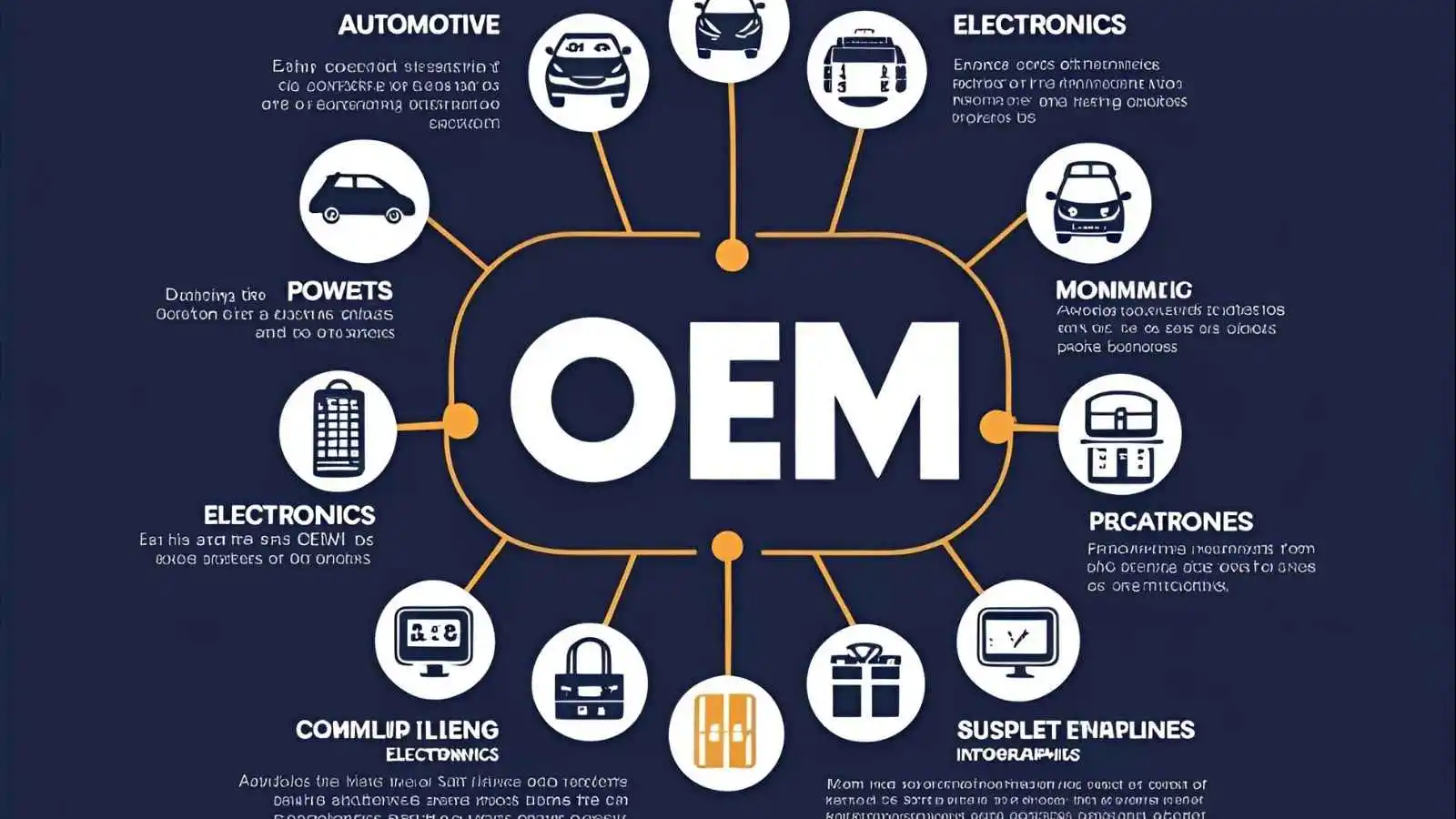
Let’s break down what OEM really means across various industries and why understanding it matters more now than ever:
1. In the Automotive Industry
OEM refers to car parts made by the original manufacturer of the vehicle. These parts are not aftermarket—they’re genuine, built to the exact specifications of the vehicle model.
- Example: If you drive a 2025 Honda Civic and replace your bumper with an OEM part, it means that bumper was made by Honda or an approved partner, not a third-party supplier.
✅ Why it matters in 2025: Modern vehicles rely heavily on digital sensors, adaptive systems, and AI-integrated controls. Using OEM parts ensures compatibility with the software and onboard diagnostics—something third-party parts may lack.
2. In the Electronics and Tech Hardware Sector
Here, OEM often refers to the company that builds components or entire devices sold under another company’s brand.
- Example: Foxconn is an OEM for Apple. They manufacture iPhones, but you’ll never see the Foxconn logo on your device.
✅ 2025 relevance: With rising demand for white-label hardware in the smart home and wearable sectors, OEM partnerships have become the foundation of scalability in tech businesses.
3. In Software Licensing
OEM software is a version of a program distributed with specific hardware—often pre-installed—and typically non-transferable.
- Example: A 2025 Dell laptop might ship with an OEM version of Windows 12, pre-activated but locked to that specific machine.
✅ Key takeaway for 2025: OEM licenses are now often linked to cloud-based verification systems, meaning unauthorized use or transfer will deactivate them immediately.
💼 Why Businesses Rely on OEMs in 2025
Companies choose OEM partnerships for a simple reason: cost-effective manufacturing with quality control.
Here’s what OEMs provide today that make them essential:
- ✔️ Precision-engineered products
- ✔️ Faster time-to-market
- ✔️ Supply chain resilience
- ✔️ Scalable production capacity
- ✔️ Embedded software and firmware integration
More than ever, OEMs in 2025 are not just making parts—they’re co-developing products, offering AI-powered diagnostics, and managing real-time quality feedback loops.
🤔 OEM vs Aftermarket vs ODM: Know the Difference
Let’s make this crystal clear:
- OEM = Made by the original manufacturer, sold under someone else’s name.
- Aftermarket = Made by a third-party, not affiliated with the original company.
- ODM (Original Design Manufacturer) = Designs and manufactures the product, and it can be rebranded by anyone.
2025 Insight: In AI-driven product ecosystems (smartphones, cars, IoT), choosing OEM parts ensures update compatibility and lifecycle support.
💬 OEM in Text Messages or Informal Usage
Sometimes you’ll see OEM used casually in messages, forums, or online marketplaces. For example:
- “Selling a PS6 controller, OEM only, no aftermarket junk.”
- “Need an OEM battery for my Galaxy device. Anyone selling?”
In text or messaging contexts, OEM means ‘genuine’ or ‘original,’ not a third-party or imitation.
📘 10 Polite, Professional, and Casual Alternatives to “OEM” in Text and Speech
While OEM is a common acronym, it’s not always the easiest or most user-friendly term in casual conversation or email. Here are 10 refined, natural alternatives you can use based on tone and context:
1. Original Manufacturer Part
✅ Use in: Formal documentation, warranty discussions
“We only install original manufacturer parts to retain your vehicle’s warranty.”
2. Factory-Made
✅ Use in: Friendly emails, consumer forums
“This is a factory-made screen, not a replica.”
3. Authentic Component
✅ Use in: Marketing copy or product listings
“Includes 100% authentic components, sourced from certified suppliers.”
4. Genuine Part
✅ Use in: Support chats, Amazon listings
“This charger is a genuine part from the original maker.”
5. Manufacturer’s Version
✅ Use in: Technical comparisons
“The manufacturer’s version of the headset has better noise cancellation.”
6. Standard Issue
✅ Use in: Military or aviation contexts
“The standard issue radar module is made by the same OEM as Boeing.”
7. Branded Original
✅ Use in: Online marketplaces
“Branded original—sealed and unopened.”
8. Certified by Manufacturer
✅ Use in: Warranty claims, formal reports
“All components are certified by the manufacturer and comply with ISO standards.”
9. Company-Specific Component
✅ Use in: B2B email negotiations
“This product contains company-specific components sourced directly from Tesla’s OEM.”
10. Official Equipment
✅ Use in: Product packaging, repair policies
“All official equipment is covered under the service agreement.”
📈 The Future of OEM: 2025 and Beyond
In the next five years, OEMs will become even more important as we shift toward:
- Modular product design
- AI-driven supply chain logistics
- Circular economy manufacturing models
- Mass customization of electronics
Companies will depend on OEMs not just for making things—but for co-creating intelligent, upgradeable products that evolve with the customer.
For consumers and professionals alike, understanding the OEM meaning is key to making smarter, future-ready choices.
✨ Final Thoughts
The term OEM is more than an acronym—it’s a gateway into understanding how today’s most complex products are built, maintained, and improved. Whether you’re fixing a device, buying a car, or licensing software, choosing OEM over generic often means better reliability, safety, and long-term performance.
As industries continue to grow more tech-centric, knowing what OEM means—and when to ask for it—can save you money, protect your warranty, and elevate your professional communication.
In 2025, OEM isn’t just about manufacturing—it’s about trust.
